How biostatistics informs public health, from individual behaviors to policy, an expert explains


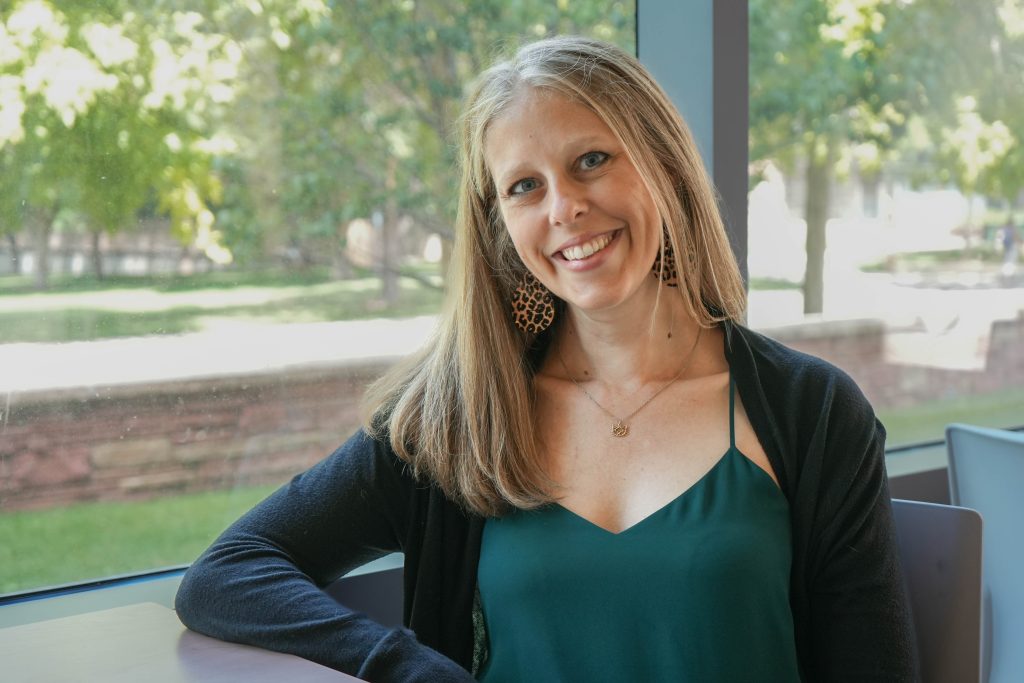
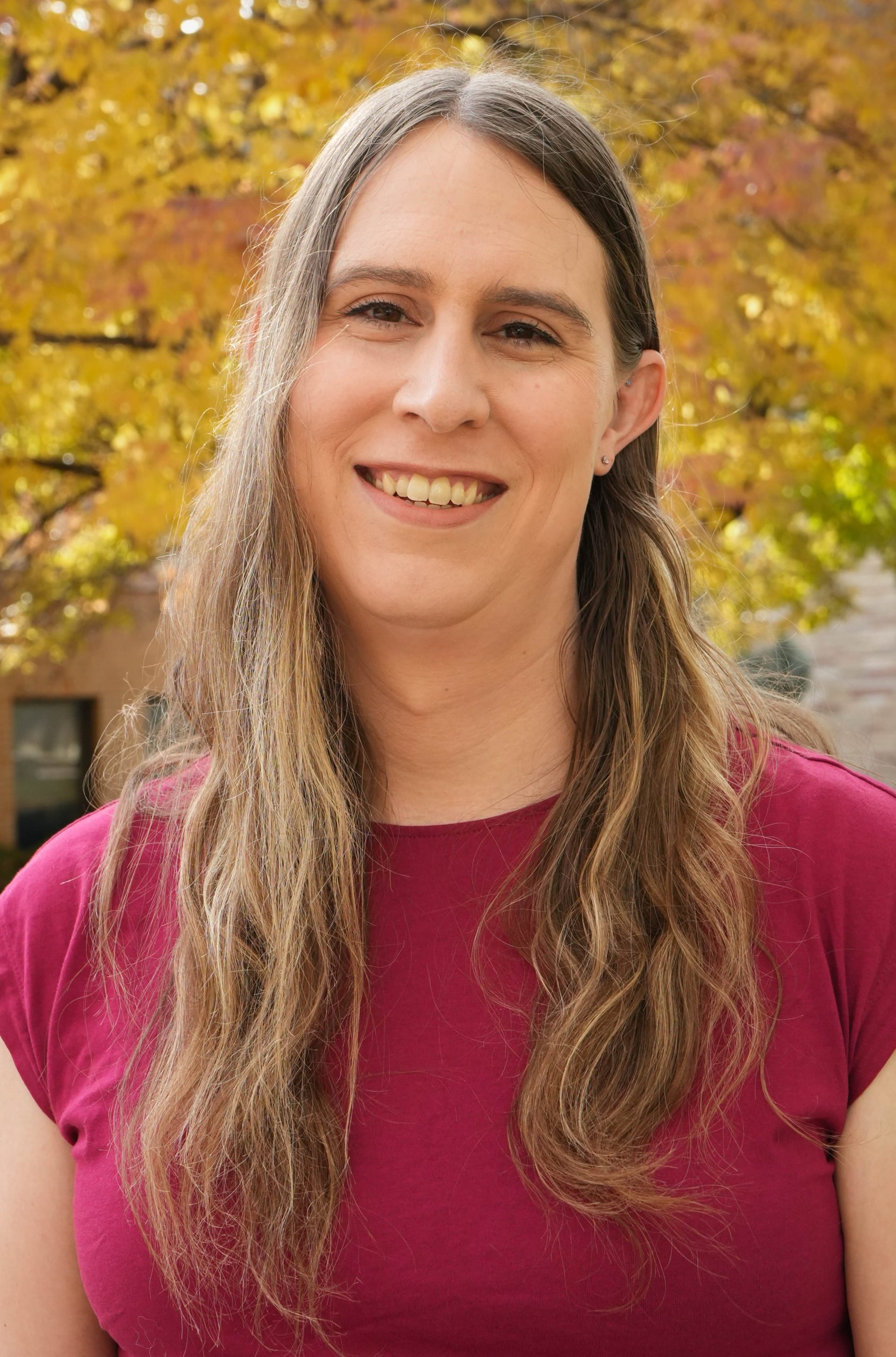
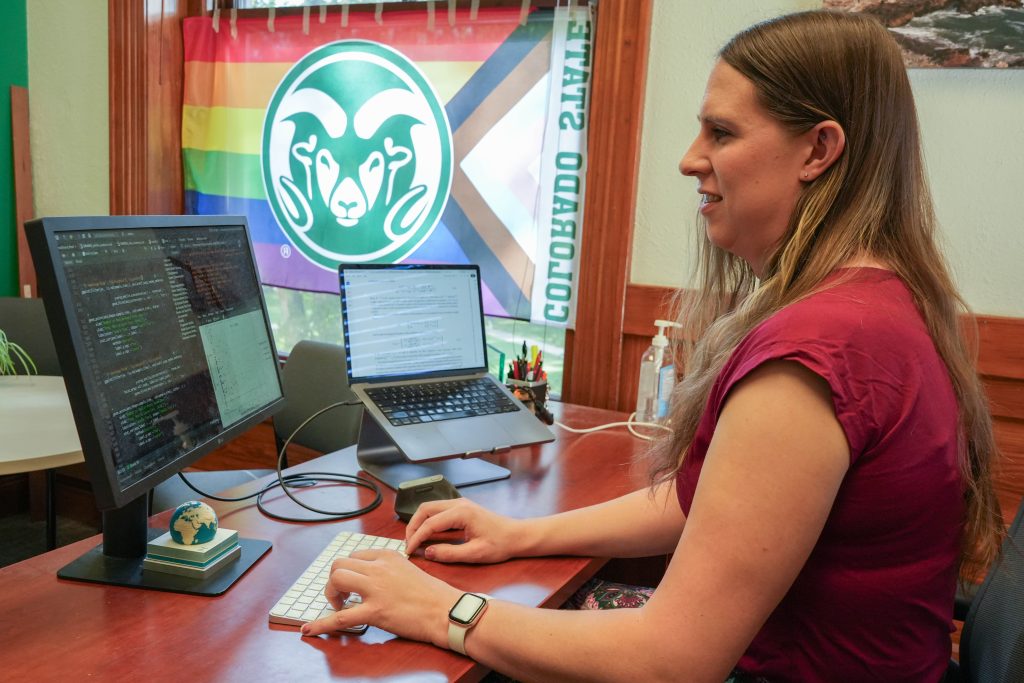
Kayleigh Keller is an associate professor and biostatistician in the Department of Statistics at Colorado State University. Keller’s work uses statistical methods to improve health outcomes for people and inform public health decision-making. I sat down with Keller to learn more about what biostatistics is, how it’s used, and how it informs decisions from the individual level to national policy.
Answers have been shortened and summarized for clarity.
What is biostatistics, and why do we study it?
Biostatistics is the area of statistics that is applied to public health, biology, and medicine, most broadly. At its core, we’re trying to take data and learn from it in the context of human health. That can be everything from studying drug development in a pharmaceutical context, to factors affecting cancer risk, and the health effects of climate change.
One of the things I love most about biostatistics is that it has so many real-world applications, and it’s integrated into all aspects of our lives. The evidence backing public health interventions, like vaccine programs, how we model and predict things like COVID-19 cases, or really anything that has to do with our health and how we manage that on both the population and the individual level, is information we’ve learned from data through biostatistics.
There are a lot of ongoing national discussions surrounding safety among public health measures, like vaccinations – how do biostatistics play a role in informing public health decisions and interventions?
Most medical and public health studies use biostatistical techniques to draw conclusions from clinical data and establish the effectiveness of interventions. This includes things like the benefits of prescription medications or new surgical techniques and calculating what levels of exposure to pollutants, if any, are safe. A big role biostatistics plays is to minimize bias in studies, so that reported conclusions accurately answer the questions being asked.
Unfortunately, data can be misused and misrepresented. In statistics, we have all these techniques for learning and generalizing from data, but it’s important to understand the context of what was collected, how it was collected, and what the information is telling us. It can be tempting for people to cherry-pick data to tell the story they want as opposed to being objective and relying on evidence-based conclusions, which is what we need to do to drive science forward.
Biostatistics seems to cover a broad scope of human health. Tell us a little bit about some of your ongoing projects.
I have a new research grant from the American Lung Association through its Indoor Air research program. The project is leveraging data from the HAPIN trial, or the Household Air Pollution Intervention Network, a years-long project focused on reducing the burden of disease from household air pollution through interventions such as replacing biomass-burning stoves with liquid propane gas cookstoves.
My colleague Andreas Neophytou from the CSU Department of Environmental and Radiological Health Sciences and I are going to apply causal inference methods to data from HAPIN to investigate the effect household air pollution has on maternal and perinatal health outcomes. One of the outcomes we’ll look at is birth weight, which can be predictive of health challenges later in life.
Primary results from this study have come back inconclusive as to whether or not the intervention had an effect, so we’d like to apply some advanced statistical methods, and look at whether the intervention is effective among certain subgroups of people, or see if certain contexts have more of an effect that we could replicate more broadly.
You’ve also done some work on aging and the effects of wildfire on wildland firefighters – tell me about those projects.
I’m part of the methods team for the Gateway Exposome Coordinating Center. The GECC is an interdisciplinary center funded by the National Institute on Aging based out of the University of Southern California that seeks to understand the impact various factors have on aging.
The project looks at the external exposome, which is everything you’re exposed to throughout your life. This includes everything from early childhood events, the political and social and physical environment you’re in, to aspects about your current job, and how that relates to aging-related outcomes, like Alzheimer’s disease and dementia risk, mobility, and quality of life, among other things.
On the methods team, we provide guidance on how to use methodological tools across disciplines- statistics, economics, and epidemiology – to better understand the effects of the exposome on aging. Where there isn’t an existing method to do what is needed, we’ll work to develop it. This project is exciting because it’s incredibly interdisciplinary – it’s a combination of epidemiologists, biostatisticians, economists, geographers, computer scientists, and exposure scientists, to name a few.
I’m also working on another project to understand if there is a connection between smoke from wildfires and other occupational-related exposures on wildland firefighters’ reproductive health. I’m providing statistical expertise to the project, which is led by Luke Montrose here at CSU. Our goal is not only to quantify how exposure might affect someone’s reproductive health, but to offer solutions or ways to mitigate exposure and allow firefighters to protect themselves better.
The concept of multivariate environmental exposure comes up often in your work – can you tell me a little bit about that?
Historically, we’ve asked questions like, what is the impact of fine particulate matter pollution on health? The impact of lead in drinking water? The impact of high temperatures and wildfires? But in reality, all these things happen simultaneously, so we need statistical methods that can account for a whole suite of factors at once. The methods need to help us determine not only how various exposures affect our health but also allow us to go back and say it’s this specific mixture of things that’s causing significant issues. From there, we can identify areas for intervention to protect human health.
Offering pathways forward is really where biostatistics shine and have a broad impact. It’s not just coming out with paper that says I found a problem with this exposure and this health outcome, but it’s also identifying areas where there are potential solutions. The clinical and epidemiological research that applies biostatistical methods can be used to help set regulations and policies at local and national levels. We do want to know what things can adversely affect our health, but what’s even better is if we can also understand where there is potential for change to protect health, whether it’s an individual behavior change or a policy change for a country.